The Timeless Mortar & Pestle: Why This Analog Tool Still Thrives
Exploring the enduring appeal of the mortar and pestle, from ancient origins to modern kitchens, and how its tactile nature fosters a deeper connection with food.
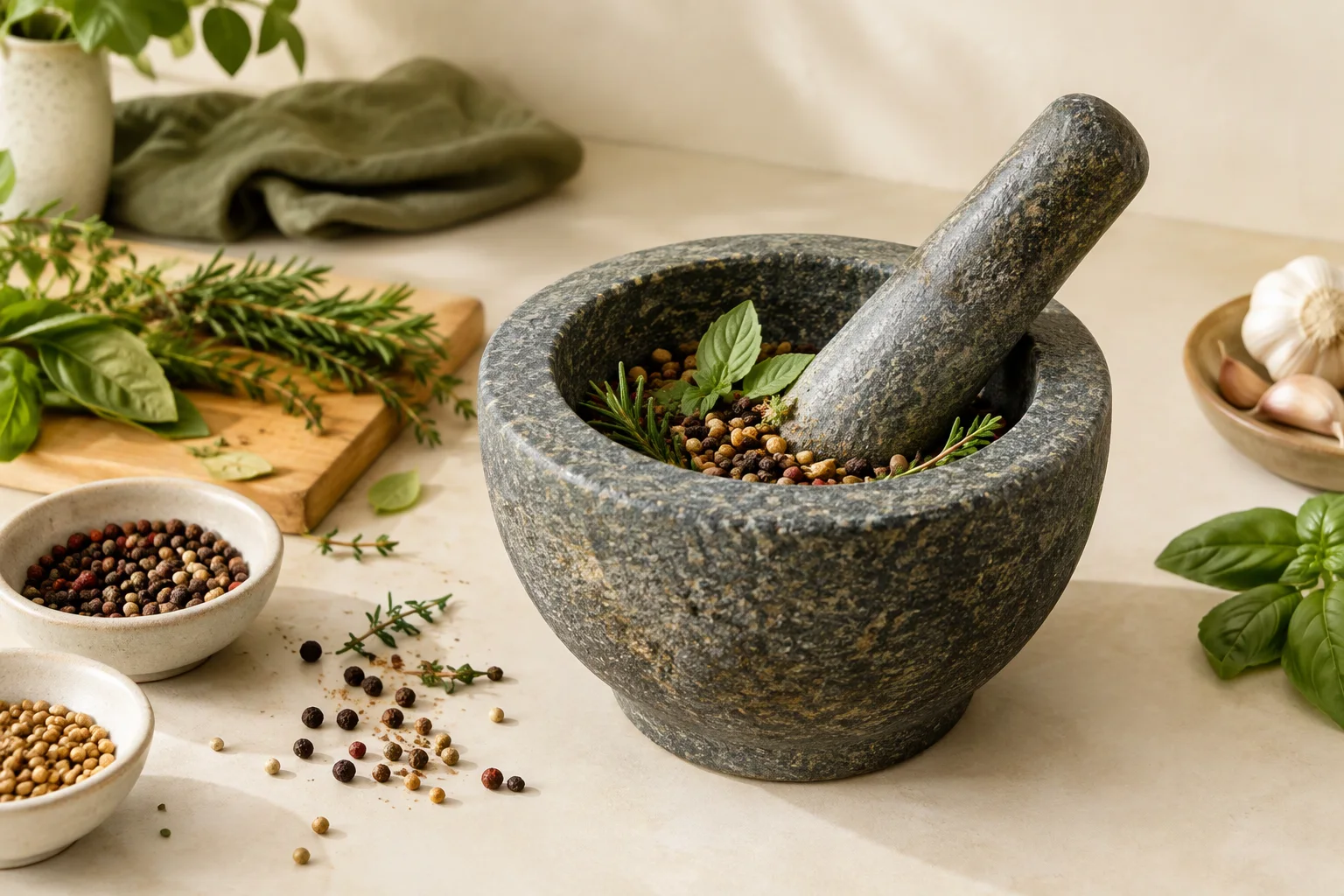
The mortar and pestle is one of the few kitchen implements that has survived the rapid turnover of culinary gadgets, remaining useful while countless tools have gone “en vogue to passé in a flash.” Its staying power lies in the simplicity of a clublike pestle that presses against a bowl‑shaped mortar, a method that “grind[s] spices, herbs, and other aromatics” through direct, tactile pressure. Unlike electric or digital devices that rely on programmed cycles, this analog tool offers an embodied experience: the user feels the texture of the ingredients change under the weight of the pestle, creating a sensory connection that many modern cooks find missing from their high‑tech countertops. The article on the mortar and pestle notes that this “visceral, lo‑fi nature” is a key part of its appeal, explaining why it reappears in culinary conversations even as other gadgets become clutter. Its resilience therefore reflects a broader desire for hands‑on, analog interaction in a world that often feels “painfully online.”
Archaeological evidence shows that the mortar and pestle has been part of human food preparation for tens of thousands of years. People in Southwest Asia and the Middle East were using versions of the tool “around 35,000 BCE,” making it one of the oldest known food‑processing devices. The Egyptian Ebers Papyrus, dating to roughly 1550 BCE, also depicts a mortar‑like instrument, indicating that ancient Egyptian practitioners recognized its utility for grinding and mixing substances. These early examples demonstrate that the basic design—pestle, mortar, and the act of crushing—has remained unchanged across millennia, underscoring a continuity that modern manufacturers rarely achieve. By tracing the tool’s lineage from prehistoric Southwest Asian workshops to the medical texts of ancient Egypt, we see a clear line of functional persistence that predates most contemporary kitchen technology.
Across cultures, the mortar and pestle has been fashioned from a wide range of materials, each chosen for its functional qualities. In Mexico, the volcanic‑rock molcajete has been a staple for roughly 8,000 years, prized for its durability and ability to impart a subtle mineral flavor. Japanese cooks favor the suribachi, a bowl with a ridged interior introduced by Chinese traders in the 11th century, which excels at breaking down softer ingredients. The Middle East boasts the massive jeren, sometimes weighing up to 100 pounds, designed for large‑scale crushing of spices and nuts. Other common materials include clay, brass, granite, and volcanic stone, each offering a distinct tactile experience—granite, for example, provides a hard, non‑porous surface that resists wear. These regional variations illustrate how form follows function: the choice of material and shape responds to local culinary needs and the types of ingredients most frequently processed.
When a pestle meets a mortar, the experience begins with a tactile dialogue: the weight of the club‑like instrument in the hand, the resistance of stone or clay, and the satisfying give as spices, herbs and other aromatics yield under pressure. Each crush releases a crisp, audible pop that signals the transformation from whole to powdered, a sound absent from the silent clicks of a digital grinder. This embodied act creates a moment of focus that feels deliberately analog, a stark contrast to the “online” cooking methods that rely on electric motors and pre‑programmed settings. The sensory feedback—feeling the texture change, hearing the crush, smelling the released oils—anchors the cook in the process, turning a routine step into a miniature performance that celebrates hands‑on craftsmanship.
Contemporary kitchens still reach for the mortar and pestle when a dish benefits from bruising rather than fine grinding. In Thailand, the oversized terra‑cotta mortar is essential for bruising chilies, garlic and lime leaves to make som tum, the bright green papaya salad that relies on a slightly coarse texture. Mexican cooks turn to the volcanic‑stone molcajete to crush roasted chilies, tomatoes and herbs into rustic salsas, preserving the bite of each ingredient. Even spice blends that call for a gentle release of essential oils—such as Moroccan ras el hanout or Indian garam masala—gain depth when the ingredients are bruised in a granite or brass mortar, allowing volatile compounds to mingle before cooking. These modern applications demonstrate that the tool’s ability to manipulate texture and flavor remains unrivaled in many culinary traditions.
Choosing the right mortar and pestle starts with material and size. Granite offers durability and a rough interior that excels at bruising, while volcanic stone provides a traditional surface for Mexican molcajetes. Clay and terra‑cotta deliver a lighter weight and are favored for Thai preparations that emphasize bruising over grinding. Brass adds weight and a sleek aesthetic for decorative kitchens. Once selected, the tool invites regular use: a quick grind of fresh herbs or a burst of spice can become a daily ritual, reconnecting cooks with the physical act of flavor building. By integrating this hands‑on instrument into everyday recipes, home chefs can revive the analog pleasure of food preparation and keep a centuries‑old tradition alive in modern meals.
Sources
The Mortar and Pestle Is the Timeless Kitchen Tool You Need · November 2, 2026
5 Cookbooks That Go Deep on a Single Ingredient · November 2, 2026