The Timeless Mortar and Pestle: Why This Analog Tool Still Belongs in Modern Kitchens
Exploring the enduring appeal of the mortar and pestle, from its ancient origins to its diverse materials and contemporary culinary uses.
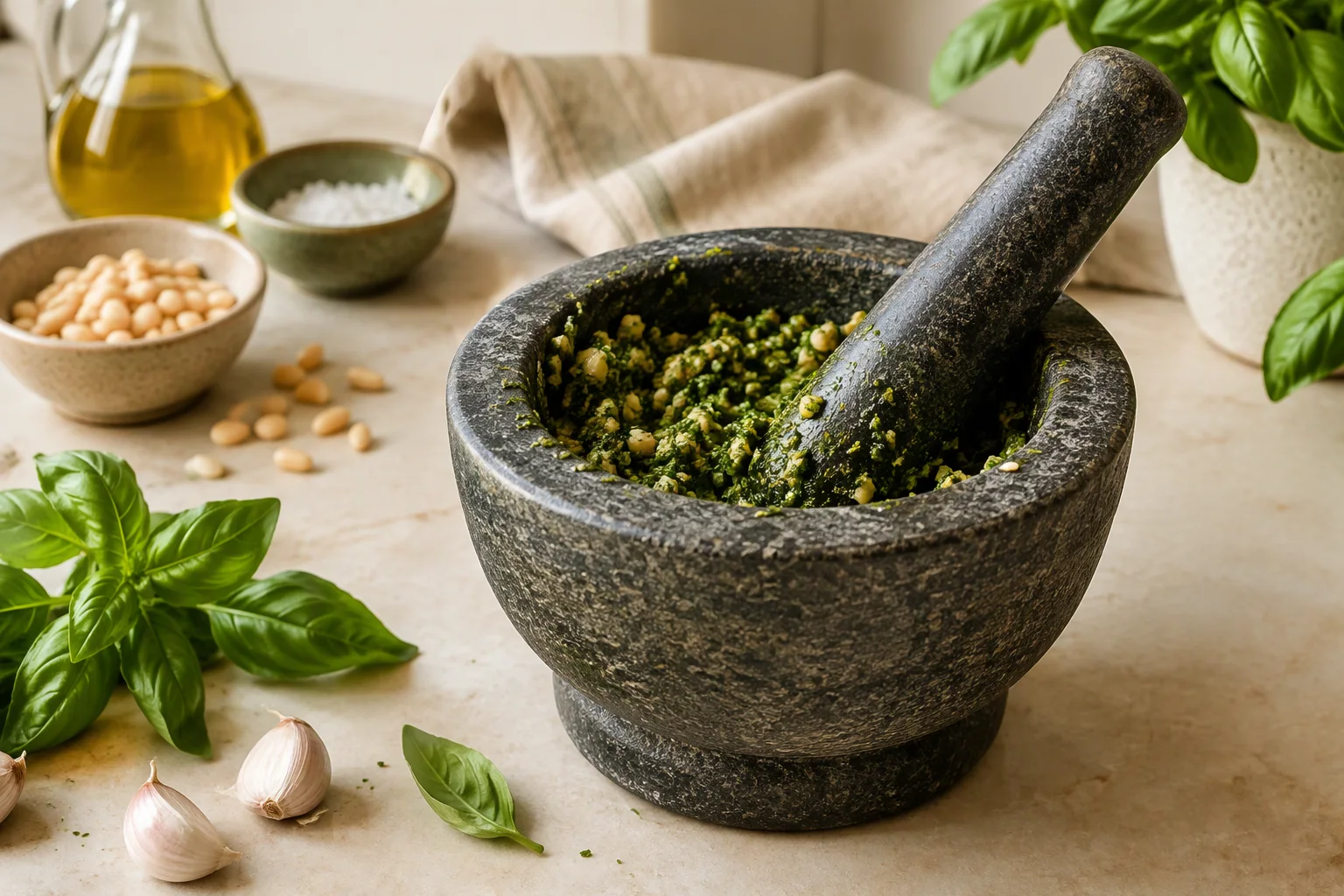
Among the endless parade of kitchen gadgets that rise and fall with each culinary trend, the mortar and pestle remains a rare constant. While blenders, sous‑vide machines and even celebrity‑endorsed mini grills have quickly become counter clutter, this humble pair endures because it relies on a simple, hands‑on process. The tool consists of a bowl‑like mortar and a club‑shaped pestle, and the act of manually crushing ingredients creates a tactile, lo‑fi experience that many modern cooks seek as an analog counterpoint to a digital world. Its unassuming design does not depend on electricity or complex mechanisms; instead, the user’s own force and rhythm drive the work. This embodied interaction is repeatedly cited as the reason the mortar and pestle continues to surface in contemporary culinary conversations, even as other once‑fashionable devices fade away.
The mortar and pestle’s longevity is rooted in an extraordinary archaeological record that stretches back tens of thousands of years. Evidence shows that peoples of Southwest Asia and the Middle East were employing versions of the tool as early as 35,000 BCE, making it one of the oldest known kitchen implements. The Egyptian Ebers Papyrus, a medical text dating to around 1550 BCE, also depicts a mortar‑like vessel, underscoring its early utility in both culinary and medicinal contexts. Over the millennia, diverse cultures have adapted the basic design to fit local materials and cuisines, from the Mexican molcajete to the Japanese suribachi introduced by Chinese traders in the 11th century. These widespread, time‑spanning examples illustrate how the mortar and pestle has persisted through shifting foodways and technological revolutions.
At its core, the pestle’s role is to grind spices, herbs and other aromatics directly against the interior of the mortar, a process that releases volatile oils and builds layered flavor in a way that many mechanical devices struggle to replicate. By applying controlled pressure and circular motion, the user can adjust the texture from a coarse crush to a fine paste, tailoring the intensity of each ingredient. This manual grinding encourages a nuanced extraction of aroma, allowing cooks to taste the evolving profile as they work. The tactile feedback and ability to pause, adjust and sense the transformation give the mortar and pestle a distinct advantage in creating depth that often feels missing from pre‑ground or electrically processed seasonings.
The mortar and pestle appears in many forms, ranging from a tiny porcelain bowl to a massive Middle Eastern jeren that can weigh up to 100 pounds. Across cultures, artisans craft the vessel from granite, brass, clay, volcanic stone, or even terra‑cotta, each material imparting a distinct feel when crushing. Granite’s dense grain offers a sturdy surface that can grind fine powders without slipping, while brass adds weight and a slightly metallic resonance that some cooks appreciate for its durability. Clay mortars tend to be porous, allowing moisture to be absorbed and subtly influencing the texture of pastes. Volcanic stone, long used by Mexican stoneware craftsmen, provides a rough interior that helps release essential oils from herbs and spices. These variations in size, style, and material shape the tactile experience and can subtly affect the final mouthfeel of a preparation.
Modern kitchens continue to turn to the mortar and pestle for dishes that demand layered flavor. In Thailand, the oversized glazed terra‑cotta mortar is essential for bruising the ingredients of som tum, the bright green papaya salad, because the tool’s design encourages the release of aromatic compounds without over‑pureeing. In Mexican cuisine, a volcanic‑stone molcajete—carved for centuries by stoneware artisans—remains the preferred vessel for grinding chilies, nuts, and spices that form the base of mole sauces, allowing the gritty texture to integrate slowly during cooking. Chefs also use brass or granite mortars to crush herbs for sauces, pesto, or spice blends, trusting the manual process to build depth that a blade alone cannot achieve. The tactile action of crushing, rather than cutting, helps develop flavor layers that define these regional dishes.
When selecting a mortar and pestle for a home kitchen, consider the intended use and storage space. A mid‑size granite bowl with a comfortable silicone‑grip handle works well for everyday spice grinding and small sauces, while a larger clay or terra‑cotta piece suits batch preparations like salad dressings or Thai salads. Weight matters: heavier bases stay steady on the countertop, reducing fatigue during extended grinding. Look for a pestle that fits snugly inside the bowl to maximize leverage. Finally, embrace the hands‑on experience: the slight resistance and audible crunch of ingredients being ground connect cook and cuisine in a way appliances cannot replicate. By choosing a tool that matches both your culinary style and kitchen ergonomics, you invite the timeless pleasure of manual grinding into every meal.
Sources
The Mortar and Pestle Is the Timeless Kitchen Tool You Need · October 10, 2026
A Chef’s Guide to the Best Restaurants in Asheville, North Carolina · October 10, 2026