Why the Mortar and Pestle Remains a Kitchen Essential
An exploration of the mortar and pestle’s ancient roots, cultural variants, tactile appeal, and its modern resurgence alongside the rise of single‑ingredient cookbooks.
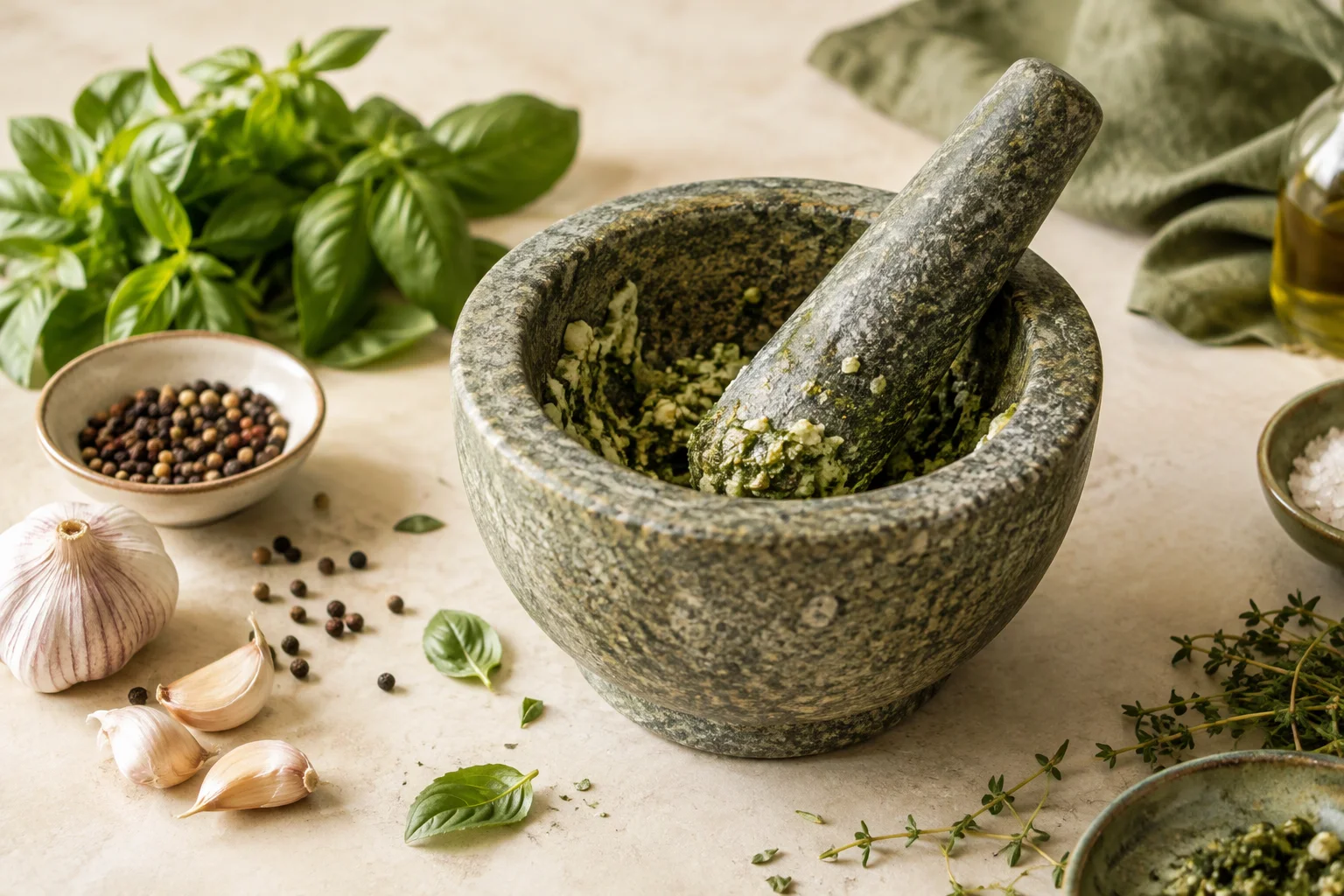
Archaeological traces show that peoples of Southwest Asia and the Middle East were already using mortar‑and‑pestle‑type implements around 35,000 BCE, making the tool one of the oldest culinary devices known to humanity. The longevity of this simple apparatus is striking: from its earliest appearances in prehistoric kitchens to its continued presence in modern homes, the mortar and pestle has survived countless waves of kitchen fashions and high‑tech gadgets. Its endurance is rooted in a functional simplicity that transcends time—an open bowl for receiving aromatics and a club‑like pestle for crushing them—allowing generations to process spices, herbs, and other ingredients without electricity or complex mechanisms. This deep historical continuity underscores how the tool has remained relevant across millennia, providing a direct, hands‑on method of flavor preparation that newer technologies cannot replicate.
Across continents, regional variations of the mortar and pestle reveal a rich tapestry of material choice and design adaptation. In Mexico, the volcanic‑stone molcajete has been a kitchen staple for roughly 8,000 years, its rough interior perfect for grinding chilies and seeds. Japanese cooks employ the suribachi, introduced by Chinese traders in the 11th century, which features a distinctive ridged interior that facilitates efficient bruising of ingredients. Early 20th‑century Papua New Guinea saw the use of long, thin dap daps for crushing betel nuts, while the Middle Eastern jeren can reach a monumental 100‑pound weight, reflecting a communal approach to large‑scale preparation. Materials range from clay and brass to granite and volcanic stone, each imparting a unique tactile experience. These diverse forms illustrate how local resources and culinary traditions shape the mortar‑and‑pestle’s evolution while preserving its core function.
The tactile act of grinding in a mortar and pestle engages the user’s senses in a way that many modern, electrically powered appliances do not. By manually applying pressure with the pestle, cooks can feel the texture of the ingredients shift as volatile compounds are released, creating an embodied sense of mastery described as “embodied wisdom.” This hands‑on process invites a direct, sensory dialogue between the cook and the food, fostering a connection that is both physical and intuitive. The simplicity of the tool encourages attention to aroma, texture, and rhythm, reinforcing the notion that the act of crushing itself is central to the culinary experience, beyond the mere outcome of a finished paste or powder.
In recent months chefs and home cooks have begun to reach for the mortar and pestle as a way to step back from screens and reconnect with a hands‑on method of flavor building. The Saveur feature notes that the tool’s “visceral, lo‑fi nature” appeals to those who want an "analog connection in a world that can feel painfully online." By grinding spices, herbs and other aromatics directly in a bowl, practitioners experience a physical feedback loop that feels like “embodied wisdom” learned through the act itself. This tactile feedback, combined with the simplicity of a single‑piece instrument, has turned the mortar and pestle from a museum relic into a countertop staple for chefs designing menus that celebrate raw, unprocessed flavor and for home enthusiasts craving a slower, more mindful cooking rhythm.
The resurgence of the mortar and pestle dovetails neatly with the rise of single‑ingredient cookbooks, a trend highlighted by Saveur’s coverage of titles that “typically go deep.” These books devote entire chapters to a food’s history, cultivation practices and specific techniques, encouraging readers to explore the nuances of one ingredient. When a cookbook details the cultural story of a spice or herb, the mortar and pestle becomes the logical tool for translating that narrative into a palpable paste or powder. The synergy is clear: the deep‑dive format teaches the chemistry and tradition behind an ingredient, while the mortar and pestle offers the tactile means to honor that knowledge in the kitchen, reinforcing the book’s purpose with hands‑on practice.
Choosing a mortar and pestle for everyday use starts with size, material and upkeep. Saveur describes a range of options—from a small, hand‑held clay bowl for quick zesting to the massive Middle Eastern jeren that can weigh up to 100 pounds for batch‑size preparations. Granite is praised for durability and longevity, making it a reliable everyday choice, while volcanic stone and brass add distinct textures for specific cuisines such as the Mexican molcajete or Japanese suribachi. For routine cleaning, a simple rinse with warm water and a brush removes residue; porous materials like stone may benefit from occasional seasoning with oil to prevent absorption of strong flavors. Selecting a mortar with a wide, stable base and a pestle that fits comfortably in the hand ensures steady grinding and reduces strain during prolonged use.
Sources
The Mortar and Pestle Is the Timeless Kitchen Tool You Need · November 6, 2026
5 Cookbooks That Go Deep on a Single Ingredient · November 6, 2026